Revolutionary Girl Utena 2011  

Saturday, May 28, 2011


The series is divided into four story arcs, in each of which Utena comes to face a different challenge at Ohtori Academy (Enoki Films calls it "Otori Junior High School"). In all of them, Utena must defend her title as the owner of the Rose Bride, with the intention of protecting Anthy. The duels almost always occur when someone with the Rose Crest ring challenges the current Engaged, though the Engaged may challenge other Duelists as well. No refusal is accepted. The matches occur in the dueling arena, a large, high platform in the academy's outskirts, which is only open to duelists. The Rose Bride pins roses to the Duelists' jackets. They then swordfight, until one duelist wins by knocking away the opponent's rose with his or her blade.


The story arc names below link to more details than given here as well as the episodes.

  • Student Council Saga (Seitokai Hen)
Episodes 1 to 13. This first part of the series introduces Utena, Anthy, and most of the main characters. It depicts how Utena ends up winning the Rose Bride, and her initial duels against the Student Council members. They in turn insist for various reasons on fighting in order to defeat Utena and win Anthy in order to gain the power to bring the World Revolution.
  • Black Rose Saga (Kurobara Hen)
Episodes 14 to 24. After repelling the Student Council's attempts to take Anthy, Utena faces another obstacle, Souji Mikage. Disguised as a genius 18-year-old school counselor, he uses his powers of persuasion and knowledge of psychology to put people under his control by coaxing them to confide their deepest hostilities and fears. Almost always, these people are students whose problems stem from conflict with Utena, Anthy, and the Student Council. He then sends them, wearing black Rose Crest rings on their fingers and frozen, black roses on their chests to fight Utena. This arc also introduces Akio Ohtori.
  • Akio Ohtori Saga (Ōtori Akio Hen)
Episodes 25 to 33. After solving the Mikage situation, Utena must fight each Student Council member again. At the same time, she finds herself the target of Akio's seduction. This creates a rift between her and Anthy. This arc is sometimes referred to by fans as the "Akio Car Arc" because each duelist is convinced to challenge Utena during a car ride with Akio.
  • End of World Saga (Mokushiroku Hen)
Episodes 34 to 39. As the conflict escalates, the dark secrets of the duels, and Akio and Anthy's true intentions behind them, are unveiled.
-->read more...

AddThis Social Bookmark Button


15 Awesome Pictures  

Friday, May 27, 2011

Collection of 15 best pictures around the internet, some are real photos, some are photoshoped, but these awesome pictures are really inspiring.


-->read more...

AddThis Social Bookmark Button


Revolutionary Girl Utena Wallpapers  

Thursday, May 26, 2011

Revolutionary Girl Utena (少女革命ウテナ Shōjo Kakumei Utena) is a manga by Chiho Saito and anime directed by Kunihiko Ikuhara. The manga serial began in the June 1996 issue of Ciao and the anime was first broadcast in 1997. The anime and manga were created simultaneously, but, despite some similarities, they progressed in different directions. A movie, "Adolescence of Utena" (少女革命ウテナ アドゥレセンス黙示録 Shōjo Kakumei Utena Aduresensu Mokushiroku, literally "Revolutionary Girl Utena Adolescence Apocalypse") was released in theatres in 1999. A number of stage productions based on the franchise were also produced in the mid 1990s, including the "Comedie Musicale Utena la fillette révolutionnaire", staged by an all-female Takarazuka-style cast.


The main character is Utena Tenjou, a tomboyish teenage girl who was so impressed by a kind prince in her childhood that she decided to become a prince herself (expressed in her manner of dress and personality). She attends Ohtori Academy, where she meets a student named Anthy Himemiya, a girl who is in an abusive relationship with another student. Utena fights to protect Anthy and is pulled into a series of sword duels with the members of the Student Council. Anthy is referred to as the "Rose Bride" and is given to the winner of each duel. As Anthy is thought to be the key to a coming revolution, the current champion is constantly challenged for the right to possess the Rose Bride.

While the show generally has the appearance of a yuri magical girl series, it is also highly metaphysical, surreal, and allegorical. It contains a mix of borrowed visuals from Takarazuka theater, shadow puppetry, and classic shōjo manga.


-->read more...

AddThis Social Bookmark Button


Rental Magica Wallpapers  

Tuesday, May 24, 2011

Rental Magica (レンタルマギカ Rentaru Magika) is a Japanese light novel series by Makoto Sanda, with illustrations by Pako. It is currently in the midst of serialization in The Sneaker magazine published by Kadokawa Shoten. An anime television series adaptation animated by Zexcs was broadcast in Japan between October 7, 2007 and March 23, 2008, airing a total of twenty-four episodes.
The plot centers around the magician dispatch service and Mage's Society: Astral. The main protagonist of the story is Astral's second President: Itsuki Iba, who, while being young and inexperienced ironically isn't even a Mage. Central to the story are Astral's many adventures with magical spirits and creatures, competing with rival company Goetia, rogue members, taboos and the Dark Magician's Society: Ophion, all while trying to complete enough jobs to pay the bills and fill The Association's quota and evade abolition. Each story arc is written as an incident in which the Astral members and their associates are involved.


-->read more...

AddThis Social Bookmark Button


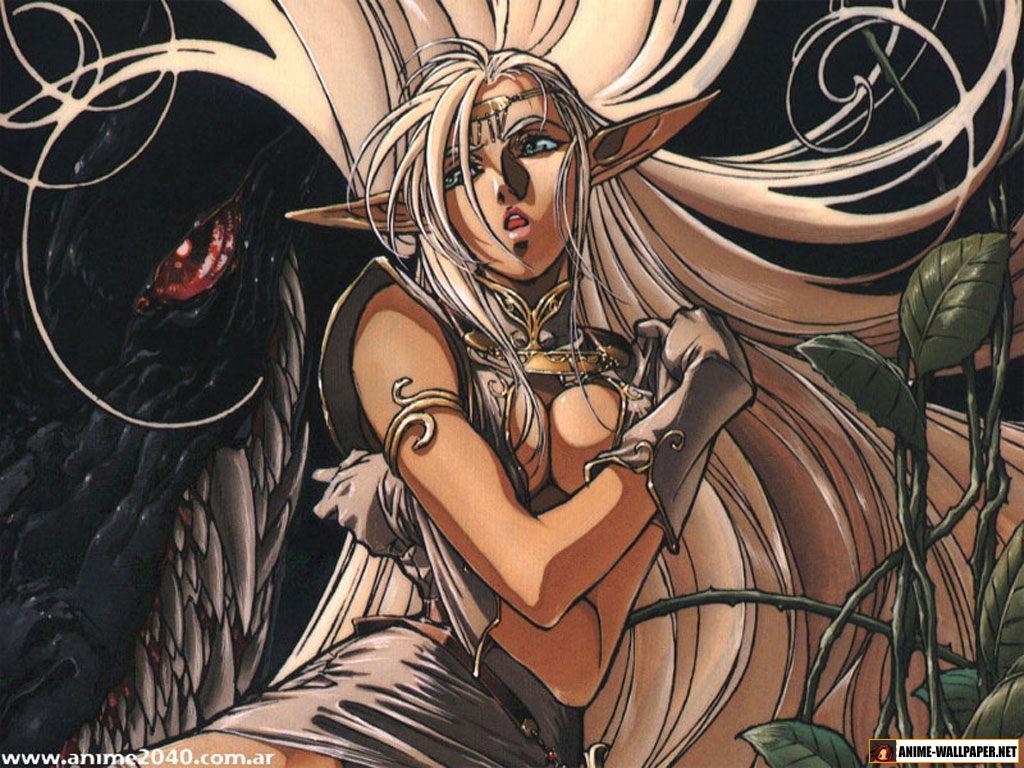
Record of Lodoss War for Dreamcast  

Sunday, May 22, 2011


The popularity of the Record of Lodoss War replays was such that the Dungeon Master Ryo Mizuno started to adapt the story into some of the earliest Japanese-language domestic high fantasy novels in 1988.

When the replay series went on to become a trilogy, Group SNE had to abandon the Dungeons & Dragons rules and create their own game, dubbed Record of Lodoss War Companion and released in 1989. All three parts of the replay series were eventually published as paperbacks by Kadokawa Shoten from 1989 to 1991


  • RPG Replay Record of Lodoss War I (RPGリプレイ ロードス島戦記Ⅰ Aru Pī Jī Ripurei Rōdosutō Senki Wan)—Parn's party, retake played according to the Record of Lodoss War Companion rules and incorporating elements from the novelization
  • RPG Replay Record of Lodoss War II (RPGリプレイ ロードス島戦記Ⅱ Aru Pī Jī Ripurei Rōdosutō Senki Tū)—Orson's party, retake played according to the Record of Lodoss War Companion rules and incorporating elements from the novelization
  • RPG Replay Record of Lodoss War III (RPGリプレイ ロードス島戦記Ⅲ Aru Pī Jī Ripurei Rōdosutō Senki Surī)—Spark's party, played according to the Record of Lodoss War Companion rules

The last volume of Mizuno's novelization was published by Kadokawa Shoten in 1993, and followed by two collections of short stories in 1995:

  • Record of Lodoss War 0: The Lady of Pharis
  • Record of Lodoss War 1: The Grey Witch (ロードス島戦記 灰色の魔女 Rōdosutō Senki Haiiro no Majo)
  • Record of Lodoss War 2: Blazing Devil (ロードス島戦記2 炎の魔神 Rōdosutō Senki Ni: Honō no Majin)
  • Record of Lodoss War 3: The Demon Dragon of Fire Dragon Mountain (Part 1) (ロードス島戦記3 火竜山の魔竜(上) Rōdosutō Senki San: Karyū-zan no Maryū (Jō))
  • Record of Lodoss War 4: The Demon Dragon of Fire Dragon Mountain (Part 2) (ロードス島戦記4 火竜山の魔竜(下) Rōdosutō Senki Yon: Karyū-zan no Maryū (Ge))
  • Record of Lodoss War 5: The Kings' Holy War (ロードス島戦記5 王たちの聖戦 Rōdosutō Senki Go: Ōtachi no Seisen)
  • Record of Lodoss War 6: The Holy Knights of Lodoss (Part 1) (ロードス島戦記6 ロードスの聖騎士(上) Rōdosutō Senki Roku: Rōdosu no Seikishi (Jō))
  • Record of Lodoss War 7: The Holy Knights of Lodoss (Part 2) (ロードス島戦記7 ロードスの聖騎士(下) Rōdosutō Senki Shichi: Rōdosu no Seikishi (Ge)
  • High Elf Forest: Deedlit Story (ハイエルフの森 ディードリット物語 Hai Erufu no Mori Dīdoritto Monogatari)
  • The Black Knight (黒衣の騎士 Kokui no Kishi)

The first volume forms the basis for the first eight episodes of the Record of Lodoss War OVA series, as well as the Record of Lodoss War: The Grey Witch manga series. The second was also adapted in manga form, and as a four-CD radio drama. The final five episodes of the OVA series are loosely based on the story told across the third and fourth novels and, having caught up with the ongoing novelization at that point, feature an original ending. The Record of Lodoss War: Chronicles of the Heroic Knight TV series is a more faithful adaptation of volumes three to seven. The first collection of short stories was adapted into the Record of Lodoss War: Deedlit's Tale manga series.

Mizuno later went on to pen two new series of novels: a prequel titled Legend of Lodoss (ロードス島伝説 Rōdosu-tō Densetsu) (1994 to 2002) and a sequel titled Record of Lodoss War Next Generation (新ロードス島戦記 Shin Rōdosu-tō Senki) (1998 to 2006), the first of which forms the basis for the Record of Lodoss War: The Lady of Pharis manga series.

Characters

The manga (and its anime derivative) Record of Lodoss War centers around the adventures of a youth by the name of Parn, the son of a dishonored knight. Part of his motivation for adventuring is to find out what happened to his father, and to restore his family's honor. Despite his inexperience, Parn is considered the leader, who is accompanied by his childhood best friend Etoh, his friend and sometimes advisor Slayn (and later on Slayn's lover Leylia), and his newfound mentor Ghim. They are accompanied by Parn's romantic interest, the high elf Deedlit, who comes from the Forest of No Return seeking an answer to her people's isolationism and an end to what she sees as a slow march to extinction and a thief named Woodchuck. Throughout the series, Parn comes into contact with friends and foes alike. His allies include King Kashue, King Fahn, Shiris, and Orson; his enemies include Emperor Beld, Ashram, and the evil necromancer Wagnard.

The manga and its anime derivative Chronicles of the Heroic Knight continues the adventures of Parn for the first eight episodes, but then centers around Spark and his adventures to complete a quest tasked onto him to protect Neese, the daughter of Slayn and Leylia. He is accompanied by his own cast of friends in the form of Leaf, Garrack, Greevus, Aldo, and Ryna. The television series shares similarities with the plot of the OVA, such as Wagnard seeking to kidnap Neese in order to use her as a reagent for the resurrection of Naneel, a priestess and the Avatar of Kardis who was slain by Leylia's mother, the high priestess Neese a short time after the battle with the demonic god. Leylia was the reincarnation of Naneel, but when she lost her virginity she was no longer capable of being the doorway or reagent needed to unseal Naneel.

The third series, Legend of Crystania, places the former villain Ashram into the seat of a would-be hero who is placed under a spell by a "god beast" of Crystania. The series then centers around Pirotess, his dark elven lover, as she tries to find a way to free him from the clutches of the spell and to restore him back to his living self.

-->read more...

AddThis Social Bookmark Button


Design by Amanda @ Blogger Buster